

Note: I wrote a draft of this essay (and this title) before I even knew my wife and I were going to have children; now, as the father of actual twin daughters, the whole thing seems even eerier to me.1
Each of us exists in thousands of dimensions. As data, versions of us hang out in virtual marts, squat in virtual warehouses, and swim in virtual lakes. In the vast majority of cases, our data are modeled for one of many very specific purposes. A credit card company might build a risk model to predict how likely we are to miss a payment, for example, or a streaming service might build a churn model to estimate the chances of us canceling our subscription. But in terms of corporations’ customer modeling, the grail is to go beyond the narrow scopes of categories like risk or churn. To simulate us in order to predict how we might react to anything, everything. Or nothing. The name marketers and marketing consultants give to the simulated person created by such a practice is Digital Twin of the Customer, or DToC.
The proliferation of DToCs will profoundly affect human experience in an age defined by increased interaction with artificial intelligence. The pervasiveness of this practice blurs further the lines between simulation and reality. Most of us will be forced to reckon with the consequences in individual moments of eeriness, in seemingly discrete occurrences that force us to become aware of the degree to which we’ve been simulated.
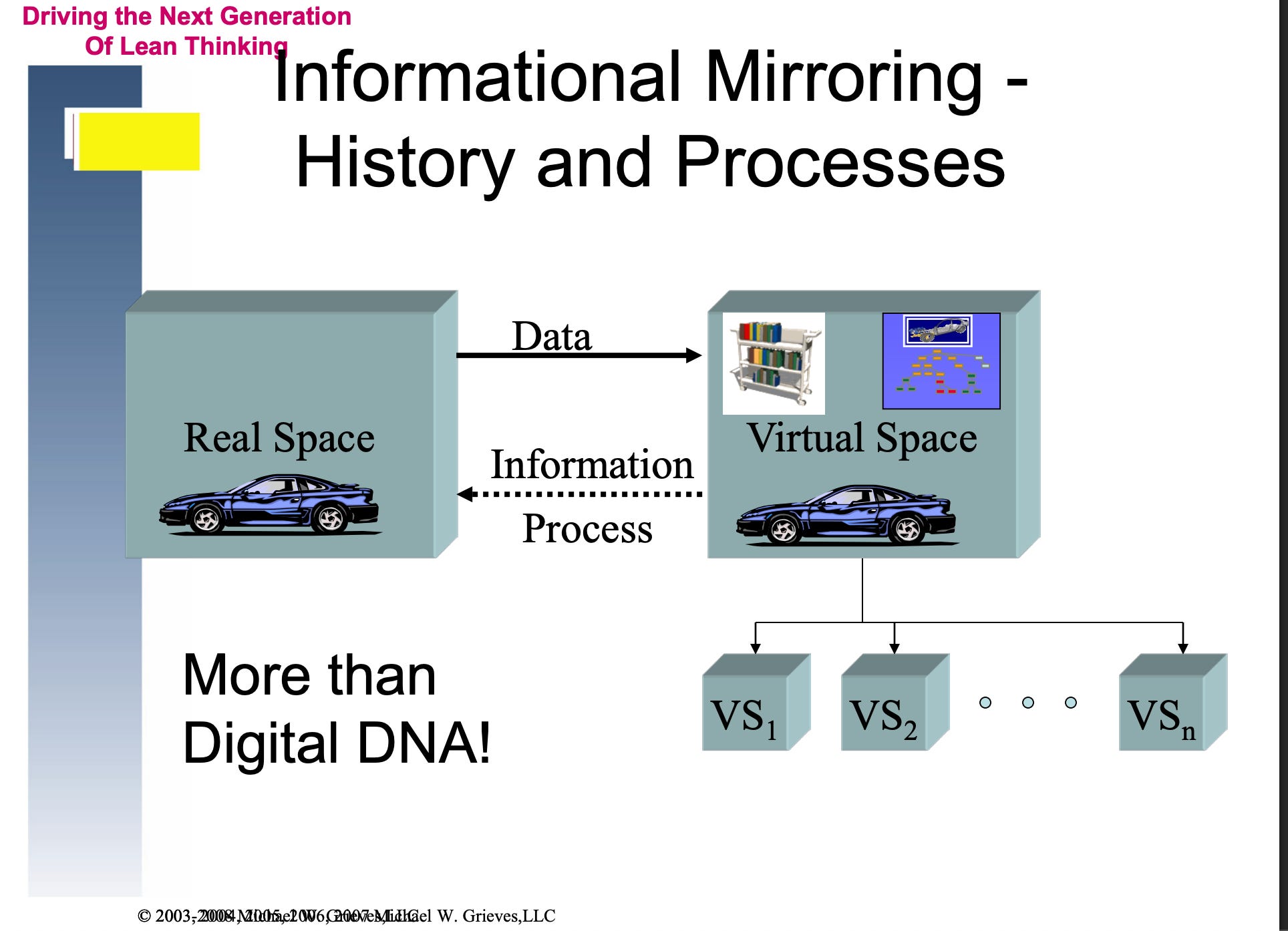
A digital twin was initially defined as a ‘virtual representation of a physical product.’ This definition largely still holds: most digital twins are simulations of hardware or physical systems. The term originated with Michael Grieves, who pioneered the technique with NASA’s John Vickers as an advanced way to optimize product life-cycle management and run simulations without the use of physical prototypes. Since then, technologically advanced companies have developed digital twins of their equipment to optimize performance, predict downtime, locate areas in need of maintenance, and manage their processes more effectively. Digital twins are a maintenance technology. The concept was designed for manufacturing: for products that make other products. For keeping machines running. Digital twins allow for efficient simulation across a wide spectrum of predictive categories.
Corporate logic, then, would dictate: why not simulate humans in the same way? DToCs can simulate human behavior on many different levels and in many different environments. They can answer questions both posed and unposed. A consultant calls DToCs the future of data collection, explaining blithely that advances in artificial intelligence make it much easier to correctly simulate behavior while reducing the risk of running afoul of laws and norms protecting customer privacy. “Customers,” she says, “can be individuals, personas, groups of people or machines.”
The jump from twinning inanimate objects to twinning humans is rather simple. The roadmap for this technology actually depends upon there being little difference between the two activities. McKinsey sees “a digital twin as a virtual representation of a physical asset, person, or process.”. They envision digital twins becoming more and more interconnected until they culminate in an “enterprise metaverse,” defined as “a digital and often immersive environment that replicates and connects every aspect of an organization.” “Every aspect,” no doubt, includes people, who are perceived through the same mechanism as machines, the only difference being a column or two in some dataset.
McKinsey’s enterprise metaverse of agency-less humans: sociopathy as modus operandi. Just as with machines on the factory floor, a DToC is built to model a real person—is a near-literal objectification—not act as an extension of a real person’s will. This is part of the term’s meaning: as we know, the conceptual understanding around digital twins comes from engineering and manufacturing, where the digital twin’s real-world sibling was not a person but an inanimate object often referred to as the ‘product.’
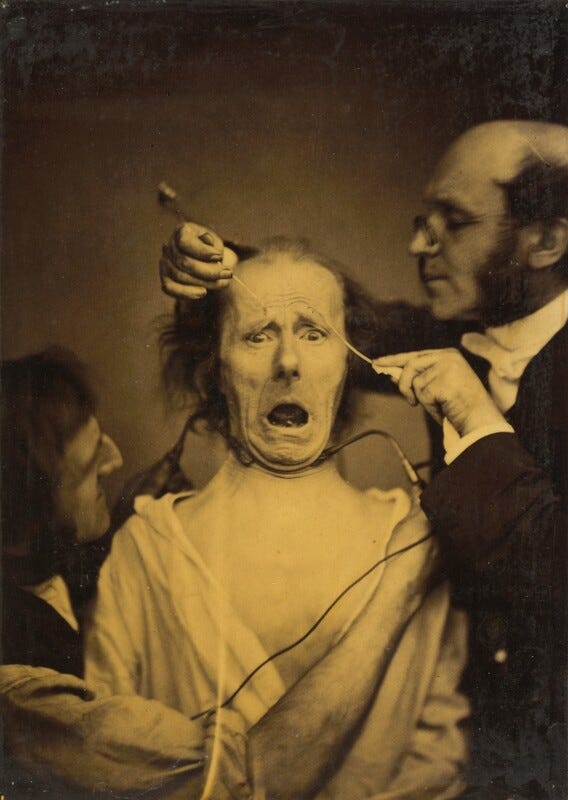
The biggest difference between an inanimate physical object and a real person or collection of persons is—well, that’s one of the big questions, isn’t it? But one way to phrase the difference is that humans’ behavior and mental states can be altered by perceptual experience; machines’ cannot, because to machines perception is not an experience. Space shuttles and wireless networks do not have human rights, but customers do. Whereas a digital twin of a 3D printer will help operators determine when accuracy might begin to suffer or when maintenance will be required, the digital twin of a shopper could result in recommendations that alter that shopper’s behavior, beginning a behavioral loop that obfuscates causality and reduces agency. Did you purchase this brand of toilet paper because it was recommended to you, or was it recommended to you because you wanted to purchase it?
While most shopping examples are clearly very innocuous, it is not hard to see how the concept translates into much more serious areas. Did you join that online hate group because you harbor a deep resentment towards immigrants, or was it simulated that you might be susceptible to joining, and after being hit with a flurry of hate-perpetuating ads, you finally clicked on the link to a message board which amplified your hate? Is there increased surveillance on your home because you have been flagged as a potential criminal, or are you behaving like a potential criminal because it is creepy to be surveilled all the time and your mental health is deteriorating as a result? It is a short step from Digital Twin of the Customer to Digital Twin of the Dissident, the Immigrant, the Artist.
Insofar as a simulation affects your real-world behavior, to be simulated is to lose the ability to consent to your own actions. But it happens insidiously, in gradients. As we become more comfortable with interacting with machines and more inured to their potential to alter our behaviors, we get closer to living the lives the machines lay out for us. On a societal level, a tendency to model humans with digital twins should prompt deep examination of how human rights are affected by the growth in adoption and sophistication of simulating human behavior across general environments. It is the individual, though, for whom the experience of having digital twins will be most challenging. It therefore falls upon us as individuals to understand how to remain intimate with our own humanity as it is turned into data.
Maybe my digital twin could have told me I was delusional when I said to myself and my wife I was ambivalent about the question of whether or not to have kids.
Works Cited or Referenced
Foo Kune, Lizzy. Digital Twins Of The Customer: The Future Of Data Collection. (2023, January 26). AdExchanger. https://www.adexchanger.com/data-driven-thinking/digital-twins-of-the-customer-the-future-of-data-collection/
From One Twin to the Enterprise Metaverse. (2022, October). McKinsey. https://www.mckinsey.com/capabilities/mckinsey-digital/our-insights/digital-twins-from-one-twin-to-the-enterprise-metaverse
Jones, D.E., Snider, C., Nassehi, A., Yon, J.M., & Hicks, B.J. (2020). Characterising the Digital Twin: A systematic literature review. CIRP Journal of Manufacturing Science and Technology.
Grieves, M. (2016). Origins of the digital twin concept. Florida Institute of Technology, 8.
Grieves, M. (2003). Presentation for a Product Lifecycle Management Center. University of Michigan.
All art used under Fair Use Doctrine and/or in accordance with licenses.